Professional Development #2
Ongoing Professional Development
OUR APPROACH
Our customizable professional development workshops are designed to engage educators in dialogue and learning about essential topics related to social-emotional learning and inclusion. We offer a range of programs to elevate educators’ knowledge and practice for supporting students.
OUR OUTCOMES
Through strategic partnership, we build lasting capacity within classrooms, across campuses, and throughout school communities.
 Develop
Common
Knowledge

Change
Mindsets
Ignite
Action
Build
Sustainable
Systems
DELIVERY FORMATS
• In-person and virtual single workshops
• In-person and virtual workshops series
• Half-day or full-day options
• Keynote presentations
WORKSHOPS
Social-Emotional Learning
Inclusion
SEL Foundations
Building a shared understanding of social- emotional learning and the language educators use to support students.
Social-Emotional Learning: What Does It Mean for Educators?
Educators’ emotional well-being significantly influences their ability to support students’ SEL development. This workshop encourages participants to reflect on their motivations, personal wellness, and the impact of growth mindsets in teaching. Through self-reflection and discussion, educators will explore how their experiences shape classroom environments and relationships with students. By prioritizing their own emotional health, participants will gain insights and strategies to foster stronger social-emotional connections with students, ultimately enhancing their teaching effectiveness.
What Is SEL?
Social-emotional learning equips students with the tools they need to navigate emotions, relationships, and personal growth. This workshop introduces and unpacks the five core SEL competencies, exploring their impact on academic success and overall well-being. Participants will build a common language and understanding of what social-emotional learning really is. By understanding the transformative power of SEL, educators will be prepared to create environments that nurture lifelong learning and success for all students.
Instructional Practices
Embedding social-emotional learning into everyday teaching through academic instruction and classroom routines.
SEL Embedded as Curriculum
Social-emotional learning is a fundamental aspect of education and is most effective when seamlessly woven into daily instruction. This workshop provides educators with strategies to integrate SEL into standard curricula, ensuring it becomes a natural part of students’ learning experiences. Participants will explore case studies, practical tools, and resources while reflecting on the supports they need to succeed. By embedding SEL into their teaching, educators can create environments that nurture academic achievement, emotional growth, and positive classroom culture.
SEL for Complex Learners
Supporting complex learners in their social- emotional growth requires intentionality and tailored strategies. This workshop helps educators identify diverse learning needs and explore the “why” behind designing purposeful SEL approaches. Participants will gain specific tools to address the unique challenges of complex learners, ensuring all students can succeed socially, emotionally, and academically. By focusing on individualized strategies, educators will leave with practical solutions to create inclusive and supportive learning environments for every student.
Integrated Practices
Connecting social-emotional learning with complementary frameworks and approaches that strengthen implementation and school climate.
Building Belonging: Proactive Circles in the Classroom
Proactive circles create structured opportunities for connection, voice, and shared understanding. This workshop explores how regular circle practices build trust, strengthen relationships, and prevent conflict. Participants will learn how to facilitate circles effectively and align them with instructional goals. By incorporating proactive circles into classroom routines, educators will foster inclusive environments where students feel heard, valued, and connected to their learning community.
Building Inclusive Communities To Support Social-Emotional Growth
Inclusive learning communities are vital for meaningful social-emotional growth. In this workshop, participants will reflect on their school’s practices, identifying barriers to inclusion and leveraging existing strengths. Through open dialogue and collaboration, educators will explore actionable strategies to create environments where all students feel valued and supported. By prioritizing inclusion as a component of social- emotional learning, participants will leave equipped to strengthen their school’s culture and build stronger student connections.
Introduction to Restorative Practices in Schools
Restorative practices provide a proactive approach to building community and addressing harm in schools. This workshop introduces the principles and foundational practices that promote accountability, empathy, and repair. Participants will explore how restorative conversations and structured dialogue strengthen relationships and reduce conflict. By integrating restorative approaches into daily routines, educators will build classroom communities grounded in respect and shared responsibility.
Transform Your Classroom: Build a Community of Respect and Repair with Restorative Practices
Restorative practices can transform classroom culture by centering accountability, empathy, and community repair. This workshop provides practical strategies for implementing restorative circles, reflection processes, and conflict resolution tools. Participants will examine how restorative approaches shift discipline from punishment to learning. By building consistent restorative structures, educators will create classrooms where relationships are strengthened and challenges are addressed constructively.
Proactive Behavior Supports
Using universal, proactive strategies to support student regulation, behavior, and emotional well-being.
The Value of Acknowledging: Relationships, Behavior, & Emotions
Strong relationships are critical for students’ emotional and academic success. This workshop emphasizes the importance of understanding and interpreting behavioral changes as indicators of students’ emotional needs. Educators will learn how to build meaningful connections, provide timely interventions, and support social-emotional development. By prioritizing building strong relationships with students, educators can continue to create a safe, nurturing environment where students feel supported, valued, and ready to learn and grow to their full potential.
Inclusive and Proactive Mindfulness in Schools that Meet All Students' Needs
Mindfulness and SEL are essential for fostering emotional well-being in all students. This workshop focuses on using these tools proactively to prevent and manage crises while ensuring accessibility for students with 504 plans or IEPs. Participants will engage in authentic discussions about equity, intersectionality, and inclusivity, gaining strategies to address diverse needs. By integrating mindfulness into school practices, educators can build inclusive environments that promote resilience, emotional regulation, and meaningful social-emotional growth.
Behavior Management
Proactive behavior management lays the groundwork for students to thrive socially and emotionally. This workshop delves into the impact of trauma on student behavior, teaching the ABCs of behavior to uncover underlying causes. Participants will explore proactive strategies that are practical and immediately applicable, empowering them to foster positive behaviors in their classrooms. By creating supportive, structured learning environments, educators can help students build resilience, manage emotions, and engage more effectively in their education.
Accommodations, Modifications, Differentiation
Access to Demonstration
Preparing for Our Inclusion Journey
Disability as Diversity
Building an Inclusive Mindset
Person-First Language
Disability and Intersectionality
Excellence for Executive Functioning
Access to Demonstration
Accommodations, Modifications, Differentiation
Bridges to Belonging
Bringing Belonging to Life
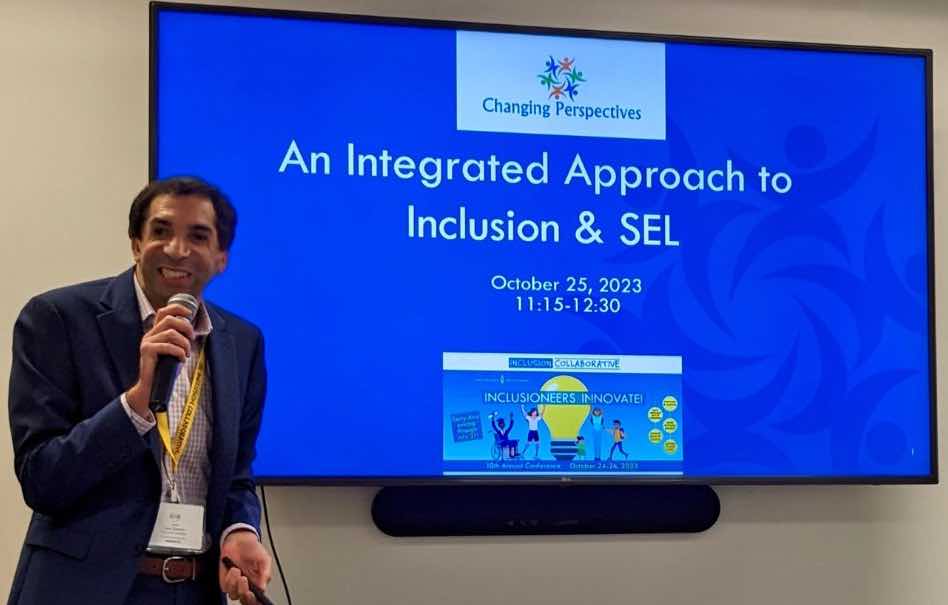
An Integrated Approach to Inclusion & Social-Emotional Learning
Connecting the Dots of UDL
All Means All: Supporting Student Independence
Empathy Interviews: A Strategy for Inclusion
The presentations at staff meetings have been a huge value of working with Changing Perspectives.