Key Takeaways
- Changing Perspectives begins school partnerships by listening to educators, leaders, and students before recommending next steps.
- Observations, conversations, coaching sessions, and student input help identify strengths and barriers that academic data alone may miss.
- The same listening mindset helps educators understand students’ experiences and respond to their needs.
- Listening leads to meaningful change when it shapes decisions, guides daily practices, and continues over time.
Good intentions can begin important conversations about inclusion, but meaningful support requires an understanding of the people and communities involved. Before recommending next steps, Changing Perspectives listens to learn what a school is already doing, what educators hope to strengthen, and how students experience school each day.
Every school brings its own strengths, priorities, and challenges. Listening helps us understand that context so we can work with educators to identify next steps that align with existing goals and respond to the experiences of their school community.
One example of this approach in action is the multiyear partnership between Changing Perspectives and Del Mar Middle School. Our case study article, What Sustained Partnership Makes Possible: Lessons from Del Mar Middle School, explores how listening, collaboration, and ongoing support helped educators strengthen inclusive practices. This article takes a closer look at one part of that story: understanding people’s experiences before recommending solutions.
Listening before prescribing guides how we work with schools and the practice we encourage educators to bring to their students. At both levels, listening helps replace assumptions with understanding and identify next steps that respond to the people involved.
Good Intentions Cannot Replace Understanding
Adults and students may experience the same environment differently. A teacher might view assigned group work as collaborative, while a student worries that classmates will reject them. A school leader might see a successful assembly, while students return to lunchrooms and hallways where established friend groups remain difficult to enter.
At Del Mar Middle School, Changing Perspectives used classroom observations, educator conversations, grade-level meetings, coaching sessions, and student input groups to establish a baseline and identify needs. The partnership examined:
- Academic access
- Classroom participation
- Social inclusion
- Physical inclusion
- Delivery of services within general education settings
Together, Changing Perspectives and the Del Mar team examined where students had access and where barriers remained. A student might have access to grade-level instruction but still feel socially isolated. Another might learn in a general education classroom but receive services in ways that restrict participation or independence.
The Same Mindset Guides Our Work With Schools and Students
For Changing Perspectives, listening is part of how we determine what support will be useful. Our school site visits create opportunities to observe daily practices, hear from educators and students, and understand a school’s strengths and challenges. Those insights help us work with school teams to identify next steps that align with their goals.
We encourage schools to bring that same curiosity to their students. Just as we need to understand a school before recommending an approach, educators need to understand students’ experiences before deciding what will help them participate, connect, and belong.
At Del Mar, listening to educators helped establish the broader context for the partnership. Listening directly to students added another essential perspective: how those practices and environments felt to the young people experiencing them.
Del Mar educators and district leaders share their experiences working with Changing Perspectives and strengthening inclusion across their school community.
Student Voices Reveal What Adults May Miss
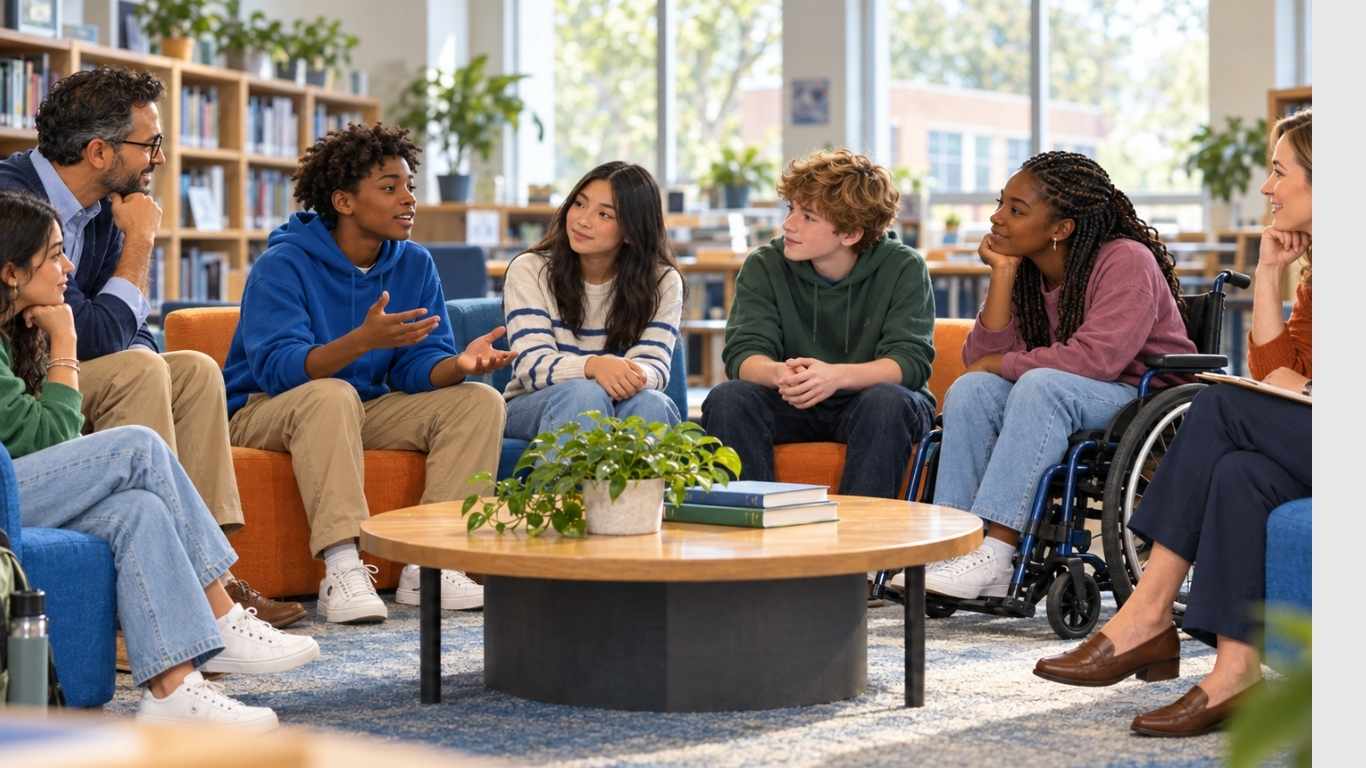
In May 2025, Changing Perspectives facilitated input sessions with 47 Del Mar Middle School students, including student leaders and students participating in targeted support programs.
Facilitators asked whether students had friends, treated differences with kindness, actively included others, felt safe expressing their identities, and supported their peers. The students responded candidly.
They described established social groups that could feel difficult to enter. Gossip, social media, popularity, clothing brands, and uncertainty about other people’s intentions affected their interactions. Some believed most students had at least one friend. Others questioned whether receiving acknowledgment meant that someone truly belonged.
One student identified an unspoken fear of appearing different. Another encouraged the school community to make differences feel normal rather than risky.
Their observations illustrate why belonging involves more than sharing a building or classroom. The Centers for Disease Control and Prevention (CDC) explains that school connectedness involves students feeling that adults and peers care about them, value them, and support their belonging. Connectedness can also promote better health, well-being, and educational outcomes.
Listening Requires Follow-Through
Inviting students to discuss their experiences marks an important step, but meaningful student voice requires more than asking questions. Students need to see that educators value their input and use it to guide decisions.
During the Del Mar Middle School sessions, students challenged the effectiveness of one-time assemblies. They wanted interactive experiences that developed empathy, opportunities to connect across social groups, stronger student leadership, and school practices that kept inclusion visible throughout the year.
Changing Perspectives used that feedback to identify next steps for a more socially inclusive school community. Recommendations included interactive empathy-building experiences, support for educators in responding fairly to social dynamics, safer opportunities for student self-expression, and student leadership through peer programs or student-led initiatives. Across these recommendations, the emphasis was consistent: make inclusion an ongoing part of school life rather than a one-time event.
The Institute of Education Sciences reports that student voice activities may strengthen agency, self-esteem, belonging, competence, leadership, and democratic skills. Educators can start by seeking feedback on a lesson and gradually invite students to help shape wider classroom or school decisions.
Student voice becomes meaningful when young people can connect what they shared with what their school does next.
Turn Student Insight Into Daily Practice
Schools do not need to wait for a major initiative to start listening. Educators can make student input part of regular classroom and team routines.
Teachers might use brief check-ins to learn who feels comfortable contributing to discussions. Grade-level teams can examine participation patterns alongside academic data. Leaders can invite students to assess common spaces, clubs, schedules, and policies through an inclusion lens. Coaching sessions can help educators consider how instructional decisions affect different learners.
The CDC’s guidance on student autonomy and empowerment recommends offering meaningful choices and inviting students to lead discussions or group activities. These practices can strengthen belonging and connection to school.
Educators should also close the feedback loop. After gathering input, explain what the school learned, what will change, what requires further study, and when students can contribute again. Transparency builds trust, even when a school cannot implement every suggestion immediately.
Keep Listening as Schools Grow
Listening before taking action is an ongoing practice. As partnerships develop, student needs shift, and schools try new approaches, educators need opportunities to revisit what they understand and consider what they may be missing.
For Changing Perspectives, that means continuing to learn alongside our partner schools and using those insights to guide our support. For educators, it means making room for student perspectives and showing students how their input informs decisions.
The work at Del Mar Middle School illustrates the value of listening at both levels. Educator perspectives helped us understand the school’s context, while student perspectives revealed experiences that added depth to that understanding. Together, those insights helped identify meaningful next steps.
Whether we are supporting a school or educators are supporting students, the starting point is the same: listen to understand, use that understanding to guide action, and keep learning from the people involved.
Explore the Full Del Mar Story
Listening was one part of a broader, sustained partnership. Read What Sustained Partnership Makes Possible: Lessons from Del Mar Middle School to explore educator perspectives, classroom changes, student feedback, and the ongoing work of strengthening inclusion.