 Key Takeaways
- Empathy interviews invite students to describe school through their own experiences, revealing perspectives adults may overlook.
- A clear focus, accessible questions, and thoughtful facilitation create opportunities for meaningful student voice.
- Listening becomes part of inclusive practice when educators use what they learn, explain next steps, and return to students for feedback.
What does school look like from a student’s perspective? The answer may differ from what adults see.
What Is an Empathy Interview?
An empathy interview is a qualitative data collection strategy that uses semi-structured interviews to understand an experience from the perspective of the interviewee and bring to light their unacknowledged needs. (Bennett et al., 2022, as cited in the Wisconsin Department of Public Instruction’s empathy interview resource)
In schools, empathy interviews give educators an opportunity to understand how students experience learning, participation, and belonging. That understanding can inform what happens next. Portico’s empathy interview guide outlines how educators can move from listening to students toward classroom and school improvement.
What Makes an Empathy Interview Different?
Educators talk with students throughout the day. An empathy interview sets aside intentional time to explore an experience from the student’s perspective.
An empathy interview has a focus and prepared questions, but it also leaves room to follow the student’s story. Rather than gathering a quick answer about whether a student likes group work, for example, an educator might ask the student to describe the last time they worked with classmates. What happened? How did they become part of the group? When did they feel included or left out?
Those details give educators something their own observations cannot fully provide: the student’s account of what the experience meant to them. Our article Listening Before Prescribing explores how understanding those experiences can guide more responsive, inclusive practices.
Begin With Something You Want to Understand
Choose a part of school life you want to understand more clearly, such as participation in classroom discussions, experiences during lunch or recess, access to extracurricular activities, or transitions between classes.
Start with curiosity. If some students rarely contribute during discussions, explore what participating feels like for them before deciding how to respond. What seems like reluctance from an adult’s perspective may have an explanation you haven’t considered.
Ask yourself: What do I hope to understand about students’ experiences through these interviews? Let that purpose guide your planning while leaving room for students to raise something unexpected.
Then consider:
- Whose experiences would deepen your understanding of this topic?
- Whose perspectives are missing from the feedback you usually receive?
- How could students’ input inform decisions within your classroom or school?
- How will you return to students to discuss what you learned and what happens next?
Invite students with different experiences, including those who may be less likely to volunteer their opinions. Include students who are experiencing success in the area you’re exploring, those encountering barriers, and those whose experiences fall somewhere in between. For example, if you’re exploring classroom discussions, invite students who participate comfortably as well as those who find participation difficult.
Each student speaks from their own perspective. A few thoughtful interviews can surface barriers, strengths, and questions worth exploring, but no student should be expected to represent an entire group.
Choose an Approach That Creates Space for Student Voice
Empathy interviews can take place individually or in small groups, with tools such as empathy mapping supporting the interview process and reflection. Choose an approach that fits your purpose and students’ communication preferences.
Individual Interviews
A one-on-one interview provides uninterrupted time to explore one student’s experience. Consider who has a trusting relationship with the student and who the student would feel comfortable speaking honestly with.
Small-Group Interviews
Small groups allow students to share different perspectives on a common experience. Consider group dynamics carefully and establish a way for everyone to contribute without requiring anyone to speak. A facilitator and separate note-taker can make it easier to focus on students’ responses during the interview.
Empathy Mapping
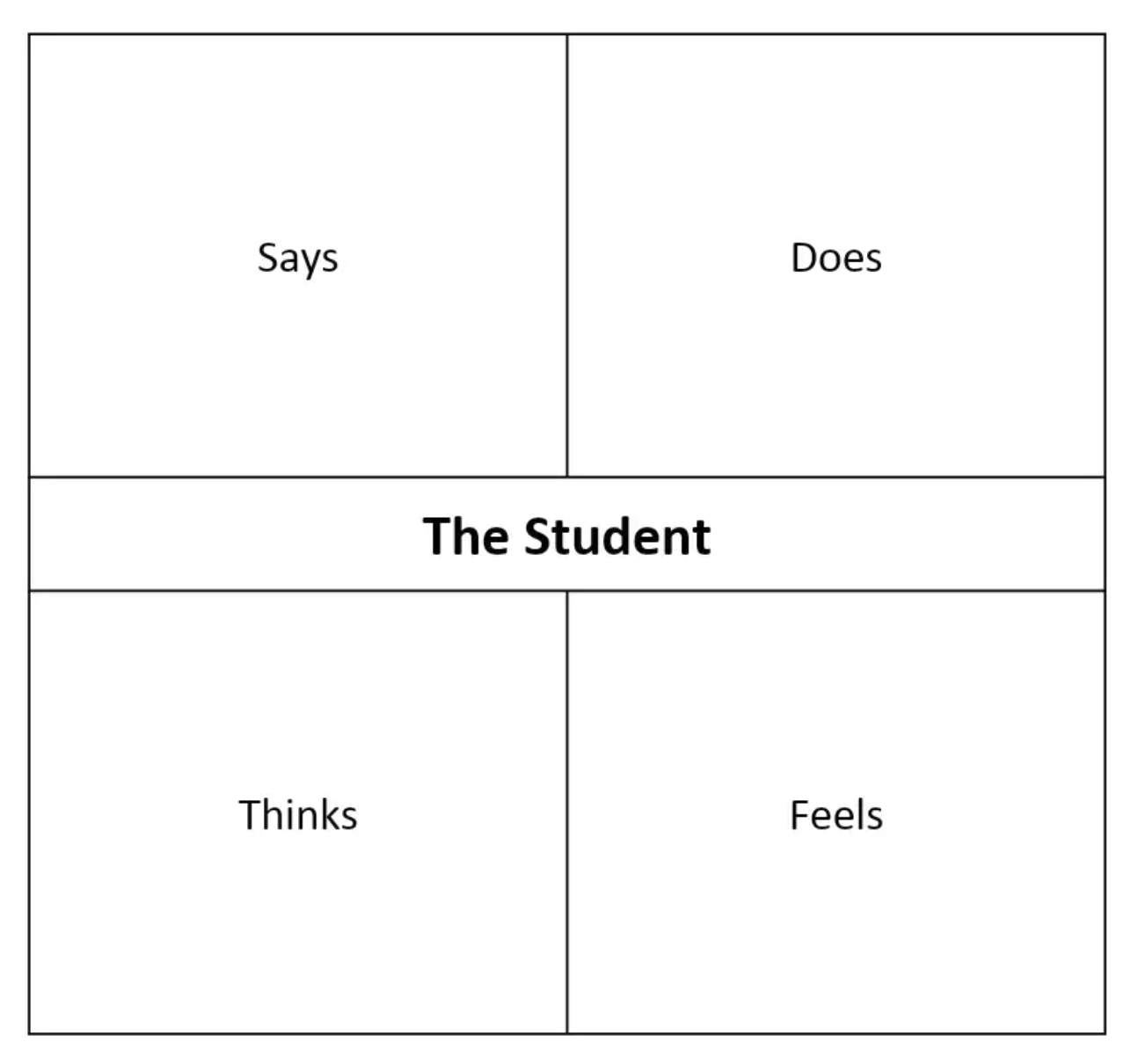
An empathy map organizes information around what a student says, does, thinks, and feels. It can support note-taking or reflection during individual or small-group interviews.
Keep students’ descriptions separate from adult interpretations. If you are unsure what a student thought or felt, ask rather than filling in the answer.
Across approaches, plan for language, processing time, and communication supports so students have meaningful ways to participate.
Connect Before Asking Students to Share
Explain the purpose of the interview, how you will use students’ input, and who will see any notes. Follow school procedures for participation, privacy, and recording, and explain any limits to confidentiality.
Begin with a question that gives students time to settle in. Let them know they can pause, skip a question, or choose not to share.
Changing Perspectives suggests using the following seven components:
- Establish roles and norms.
- Connect with students.
- Evoke stories.
- Dig deeper.
- Ask for suggestions.
- Express gratitude.
- Articulate next steps.
This sequence keeps attention on both the experience students describe and the relationship between the interviewer and students.
Ask Questions That Invite Stories
Prepare a few open-ended questions connected to your focus. Adapt the wording to students’ ages and communication needs.
For example:
- Tell me about a recent moment when you felt included at school. What was happening?
- Walk me through what happens when you join a group activity.
- Describe a time when you wanted to contribute but decided not to. What influenced your decision?
- What do you wish adults understood about this part of your school day?
- What would you like to see happen differently?
Follow-up questions can uncover details the first answer leaves unexplored: “What happened next?” “Can you tell me more about that?” or “What made that experience different?”
Leave room at the end for anything your questions missed.
Listen With Curiosity
Be curious, listen more than you talk, be fully present, avoid interrupting or challenging students’ accounts, and express gratitude.
Putting those norms into practice takes intention. A student may describe an experience differently from how you remember it. Resist the urge to explain an adult’s intentions or immediately offer a solution. First, seek to understand.
Paraphrase what you heard and invite corrections. Students should have an opportunity to clarify their meaning before adults draw conclusions.
Make the Next Step Visible
After the interviews, review what students shared. Look for recurring themes, differences in experience, and observations that challenge your assumptions. Pay attention to what is working as well as where students encounter barriers, and consider their perspectives alongside other information about the classroom or school.
Choose a manageable response and explain how students’ input informed it. For example, if students describe difficulty entering group activities, a teacher might try a different process for forming groups. After several opportunities to use the new approach, ask students what changed about their experience and what still feels difficult.
Be clear about what you can change, what requires collaboration, and what needs further exploration. Thank students for their contributions and tell them when they will hear from you again. Even when a suggestion cannot be implemented, explaining the decision shows that their input received consideration.
Treat empathy interviews as part of an ongoing process of learning, reflection, and adjustment. Return to students to understand whether changes are making a difference and what needs attention next. Following through makes the connection between what students share and what adults do visible.
Bring Empathy Interviews to Your School
Hearing directly from students gives schools a clearer understanding of what is working, where barriers remain, and how daily practices affect participation and belonging. An external facilitator can offer students space to speak openly, especially when they may hesitate to share feedback with the adults who teach or support them.
Changing Perspectives partners with school teams to identify whose experiences they need to understand, develop focused questions, and facilitate empathy interviews. Together, we examine what students share and identify practical next steps, building on successful experiences and addressing barriers students describe.
What would you like to understand about your students’ experiences? Connect with Changing Perspectives to discuss how empathy interviews can inform your school’s next steps.